


TL;DR
For modern labor management, Manufacturing Execution Systems (MES) provide the real-time visibility, structure, and context needed to manage skills, assignments, productivity, safety, and compliance directly on the shop floor. By treating labor as a core pillar of production, manufacturers can improve workforce utilization, reduce risk, and scale more effectively.
Key takeaways:
- Labor management is operational, not administrative: Effective workforce management requires real-time context around production, equipment, quality, and safety.
- MES connects labor to production events: Skills, certifications, assignments, and performance are tied directly to what’s happening on the shop floor.
- Real-time visibility improves utilization: Dynamic dispatching, faster reassignments, and workload balancing reduce downtime and variability.
- Compliance and safety become built-in: MES workflows enforce certifications, SOPs, and safety checks as part of daily operations.
- MES data enables future AI-driven labor decisions: Structured, contextual labor data creates the foundation for predictive staffing, performance insights, and personalized training.
The Labor Problem
Every manufacturer faces this same challenge: labor is becoming increasingly difficult to find, train, and retain. Furthermore, skills gaps are widening; experienced workers are retiring; and many new hires require more training than ever before—all while quality and output expectations continue to rise.
In this precarious landscape, how teams are deployed and their productivity can make or break production.
However. With the help of Manufacturing Execution Systems(MES), manufacturers can improve visibility, structure, and intelligence around their workforce. This helps organizations utilize their teams more efficiently and empower workers’ success.
To understand this impact, let’s break down how MES improves labor management and how a platform like TrakSYS can make a measurable difference.
What Labor Management Really Means on the Shop Floor
For years, labor management meant scheduling shifts and tracking hours, but in today’s complex smart factories, it involves much more, such as:
- Assigning tasks
- Verifying skills and certifications
- Providing guidance and instructions
- Tracking productivity and performance
- Ensuring safety and compliance
- Responding to rapid demand changes
- Capturing real-time feedback
Many systems could manage these tasks, but ERPs, HR teams, and training platforms often lack visibility into real-time operational context. But with the help of an MES—the system that sits closest to the shop floor—labor can be tracked and associated with production events, equipment performance, and quality assessments.
Why MES Should Be the Hub of Labor Data
TrakSYS can orchestrate production and seamlessly aggregate labor variables such as:
- Work orders
- Schedule health
- Skills and certifications
- Material availability
- Machine status
- Quality controls
- Safety checks
- Real-time job progress
By centralizing these processes in a unified platform, TrakSYS can answer questions like: Who is qualified to run this task right now? Is a staffing issue causing this line to slow down? Did the operator complete every required safety check?
With an MES like TrakSYS, labor is a critical component of production, not a separate spreadsheet or disconnected HR system.
How MES Improves Labor Management
Many manufacturers still rely on outdated tools like whiteboards, isolated spreadsheets, or verbal communication to manage their workforce. With modern MES features, manufacturers can boost workforce efficiency, support compliance, and drive greater accountability on the plant floor.
What Makes TrakSYS Especially Strong at Labor Management
While most MES platforms can enhance labor management, TrakSYS is purpose-built to offer additional capabilities that make managing your workforce not only more efficient but also more connected, intelligent, and intuitive.
Connectivity & Integrations
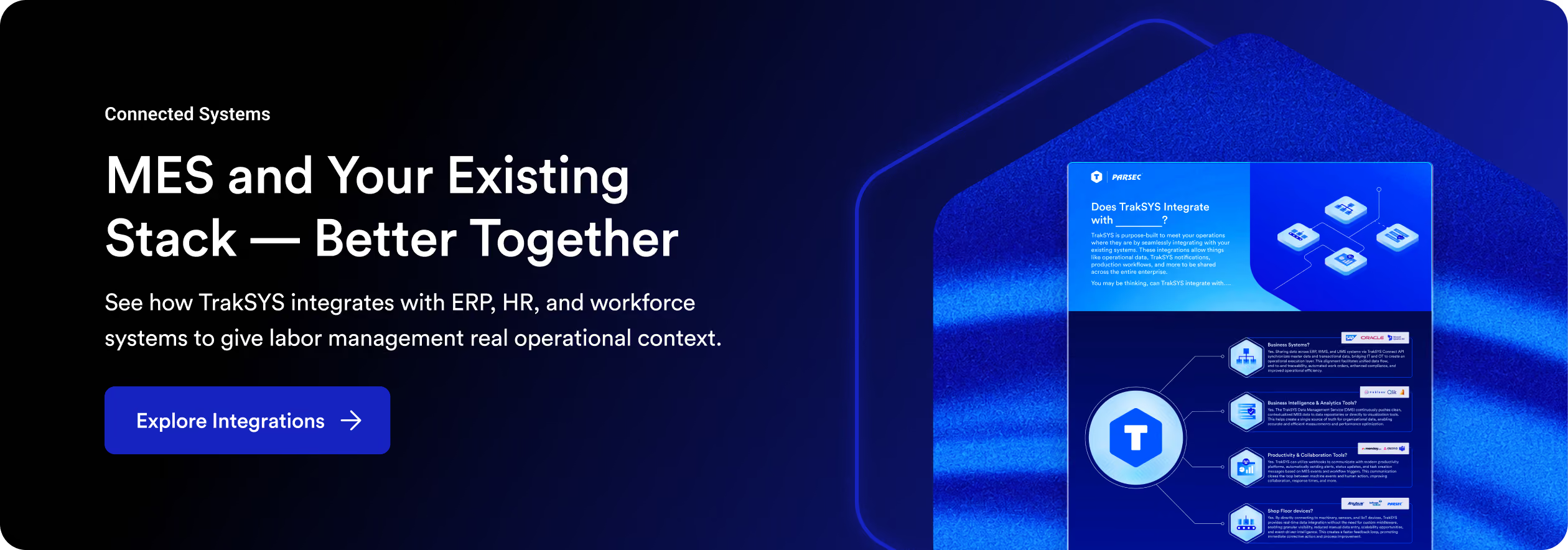
TrakSYS can integrate with systems across your enterprise, including HR platforms, LIMS, badge readers, ERPs, APS tools, and more. Thus, pulling relevant labor and qualification data into a centralized operational layer. This connectivity enables real-time validation of workforce readiness and ensures informed labor decisions.
Smart Devices for Real-Time Data Collection
TrakSYS Smart Devices collect data and flow directly into the platform’s models, dashboards, events, and workflows, offering real-time visibility. These IIoT devices enable operators and managers to monitor production in real-time using tablets, scanners, sensors, and touchscreens. Smart devices reduce manual data entry and keep data flowing automatically.
Workflow Builder & State Machines
With a low-to-no-code workflow builder and configurable state machines, managing labor with TrakSYS enables manufacturers to define allowable transitions, making it as simple as possible to enforce critical rules around labor assignment, compliance, and escalation. Whether it’s requiring that only certified operators start a job, mandating supervisor approval for rework, or launching training protocols when performance deviates, TrakSYS can seamlessly integrate operational policies into your workflows.
AI Capabilities
TrakSYS IQ assistant* adds another layer to labor management. It generates insights using natural language queries, allowing users to ask questions such as Why did this particular shift miss output targets? Or which teams are consistently high performers? This tool will be able to highlight staffing gaps, recommend resource adjustments, and forecast future labor needs based on established trends, providing decision-makers with a forward-thinking edge.
The Future of Labor Management: AI + MES
Together, AI and MES are reshaping labor management. MES can provide the structured, contextual data AI needs to uncover trends and generate insights.
As AI matures and is fueled by MES data, manufacturers will be able to analyze production patterns, seasonality, and shift performance to anticipate staffing needs. Rather than manually creating schedules, teams may be able to leverage AI-generated forecasts for quicker, more proactive labor decisions.
Similarly, AI can help personalize training to each operator’s performance, experience, and certifications. This helps reduce bottlenecks and provides plant managers with insights to optimize task allocation, especially when labor data is compared against schedules, machine status, and other information collected and organized by MES.
Conclusion
Labor is one of manufacturing’s most important and constrained resources. Factories that manage labor well empower workers, reduce variability, and make better decisions using real-time insights.
In a landscape where every shift, team member, and skill set matters, data gathered by an MES is essential for running a safer, smarter, and more resilient factory.
MES makes labor management intelligent, structured, and scalable.TrakSYS takes it a step further with integrated workflows, AI-driven insights, and connectivity that unifies people, processes, and data.
Ready to learn more about TrakSYS and how it can optimize your labor management strategy? Contact us today.
*Wide release ofTrakSYS IQ Assistant is expected in early 2026
FAQs
Related Blog Posts
.avif)
.avif)
.avif)
.avif)





Let’s Build Your Plan
We’ll help you create the right configuration—today and for the future.