


MES vs. ERP: The Guide to Manufacturing and Enterprise Systems
TL;DR
Manufacturing Execution Systems (MES) and Enterprise Resource Planning (ERP) each serve distinct but complementary roles in manufacturing: ERP focuses on enterprise-wide planning, while MES manages real-time production execution. Understanding their differences and how they integrate helps manufacturers improve operational visibility, decision-making, and cross-system data flow.
Key takeaways:
- ERP manages enterprise planning: ERP systems handle inventory, finance, procurement, and broader business processes.
- MES manages real-time execution: MES focuses on production scheduling, machine data capture, traceability, quality, and workflow enforcement.
- Complementary integration drives value: When ERP and MES are integrated, manufacturers benefit from aligned planning and execution with minimal data silos.
- Improved decision-making: The combined visibility of ERP and MES enables faster responses to disruptions, better resource optimization, and more accurate performance insights.
As they continue down the road of digital transformation, a plurality of manufacturers looking at both Manufacturing Execution System (MES) and Enterprise Resource Planning (ERP) systems aren’t trying to determine which technology they need—they’re invested in learning how these two offerings work together.
Whether you’re evaluating software for the first time or looking to better integrate your existing platforms, this guide explores the core functions of MES and ERP, and how these two versatile—and different—technologies work together to create a unified impact.
MES vs. ERP: Comparison & Definitions
While MES and ERP work synergistically, it can be helpful to understand their individual purposes and how they differ within a manufacturing organization. :
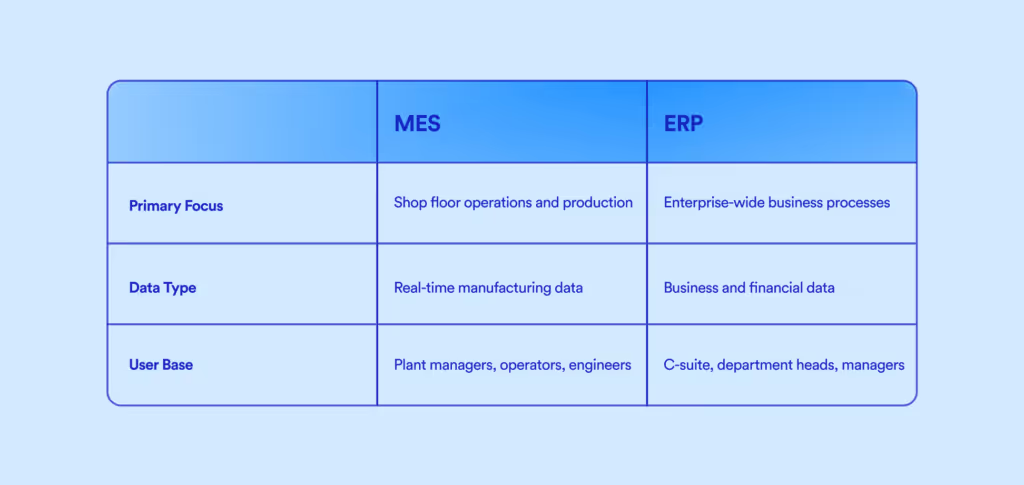
Now, let’s take a closer look at each system’s key benefits and use cases.
MES
Manufacturing Execution Systems monitor, track, document, and help teams execute and control production processes in real-time. These platforms bridge the gap between business-level planning and machine-level operations, helping establish enterprise-wide visibility, knowledge, and control.
Core MES Functions:
- Real-time data collection and monitoring
- Production scheduling, execution, and workflow management
- Resource allocation and tracking
- Performance and OEE analysis
- Quality management and defect tracking
- Maintenance and downtime management
- End-to-end traceability and audit trails
- Compliance and reporting
ERP
Enterprise Resource Planning systems streamline the management of core business functions by centralizing data and processes into one integrated platform. These systems unify departments and improve collaboration to drive higher productivity, uncover insights, and reduce risk.
Core ERP Functions:
- Project management
- Business intelligence and reporting
- Financial management
- Inventory order management
- Human resources and payroll
- Supply chain management
- Customer relationship management (CRM)
- Manufacturing (basic, high-level production planning)
MES vs. ERP: Five Key Differences
Both MES and ERP are valuable tools when implemented correctly. Yet, they operate in different parts of the enterprise. Below are five key areas where MES and ERP differ:
- Scope and Functionality
- MES offers deep visibility at the operational level by collecting, monitoring, and analyzing data from the shop floor.
- ERP systems take a broader view, integrating multiple departments and business functions into one system.
- Data Collection and Processing
- MES collects real-time data from machines, sensors, and operators for live production monitoring.
- ERP systems glean insights from transactional business data such as orders, invoices, and financials, which are analyzed intermittently.
- User Interface and Accessibility
- MES interfaces are optimized for production environments with intuitive, user-specific dashboards—think shop floor monitors, HMIs, and mobile devices.
- ERP systems are typically accessed by management and back-office teams through web and desktop portals.
- Reporting and Analytics
- MES provides real-time reporting from high-level summaries to granular details—filter by categories such as shift, line, batch, product, operator, etc. Intelligence from these platforms enables teams to monitor operational KPIs such as OEE and Quality. They enable root-cause analysis and support Lean Manufacturing initiatives.
- ERP provides high-level business reports related to financial performance, inventory, and forecasting.
- Scalability and Flexibility
- MES platforms can be modular and customizable to allow for phased implementation.
- ERP systems are scalable across business functions but may be less agile in adapting to specific shop floor changes without customization.
MES and ERP Integration Best Practices
When MES and ERP systems are integrated properly, they form a powerful digital thread to provide value across the entire enterprise. However. That said, effective integration requires thoughtful architecture planning. The way your ERP and MES systems connect will determine how data will flow across your organization, how easily the systems scale, and how quickly issues can be diagnosed and resolved. Understanding different architecture options is essential for IT and manufacturing teams as they evaluate long-term maintainability, cost, and flexibility. Here’s a look at three common architecture approaches:
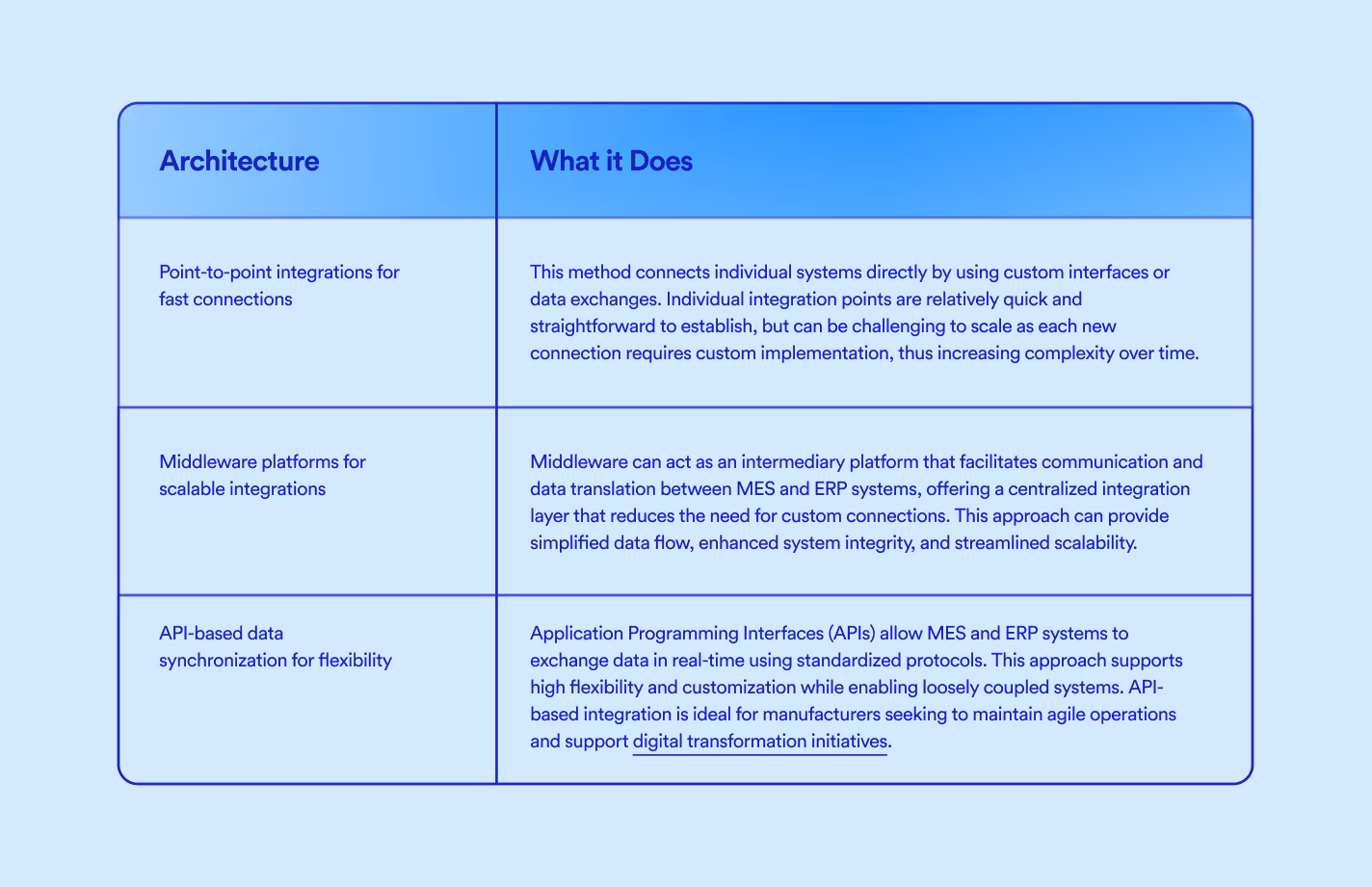
When deciding architecture, key challenges include data synchronization, system downtime during deployment, and defining ownership for cross-functional processes. Choosing an MES with proven integration capabilities—like TrakSYS—can help reduce risk and ensure a smoother rollout.
ROI Analysis and Cost-Benefit Comparison
Both MES and ERP systems offer measurable returns, but their timelines and metrics can differ. MES tends to show faster ROI due to its immediate impact on shop floor operations. Platforms like TrakSYS enable manufacturers to see tangible operational gains within just months of deployment, with opportunities to improve equipment efficiency, reduce scrap, minimize downtime, and increase first-pass yield. ERP, on the other hand, may take longer to deliver ROI because of its broader enterprise scope and complexity of implementation. That said, ERP systems can generate long-term strategic value by improving financial visibility, optimizing resource planning, and centralizing key business functions. For organizations implementing both systems, the combination can significantly amplify ROI by optimizing production planning to be as precise as possible. An integrated MES-ERP approach gives businesses the complete visibility, knowledge, and control they need to eliminate data silos, improve decision-making, and allow for more accurate forecasting and planning.
Conclusion
In today’s fast-paced manufacturing environment, digital infrastructure is the backbone of operational excellence. While MES and ERP systems serve different functions, they are not in competition—they are complementary technologies that, when properly integrated, create a seamless flow of information from the shop floor to the C-suite, and everywhere in between. ERP systems provide the enterprise-wide visibility and financial oversight manufacturers need to remain competitive, while MES delivers the granular, real-time data that drives efficiency, quality, and agility on the shop floor.Ready to learn more about how TrakSYS can help you get the most value out of your ERP and other shop floor systems? Contact us today.
FAQs
Related Blog Posts
.png)







Let’s Build Your Plan
We’ll help you create the right configuration—today and for the future.