



TL;DR
Statistical Process Control (SPC) is a quality management method that uses data and control charts to monitor manufacturing processes and detect abnormal variation. When integrated with MES platforms like TrakSYS, SPC enables real-time alerts, deeper operational context, and faster responses to quality deviations.
Key takeaways:
- SPC monitors process variation using statistical analysis.
- Control limits (UCL, LCL, centerline) help determine when a process moves out of control.
- SPC distinguishes variation types such as common-cause and special-cause deviations.
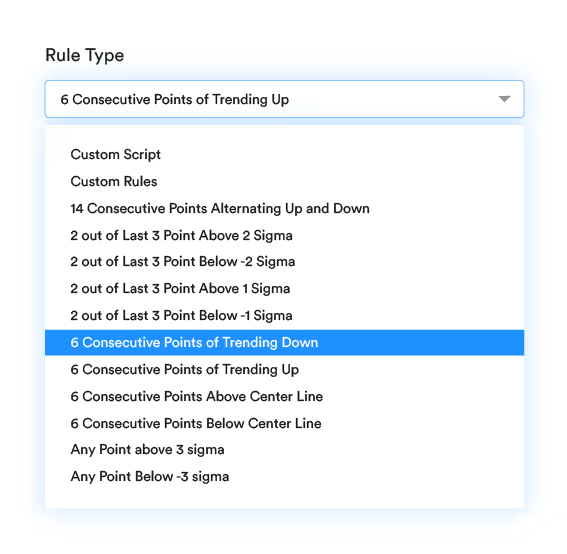
- MES platforms like TrakSYS enable real-time SPC monitoring, triggering alerts when parameters exceed limits.

A Defining Component of Effective Quality Management
Quality by the Numbers
Statistical Process Control (SPC) is a vital aspect of quality management within manufacturing. With its ability to help businesses stabilize and enhance the quality of their goods and processes, reduce scrap and rework, and optimize utility consumption, SPC—and its mathematical approach to data analysis—is a pivotal part of any successful quality management program.
The Thresholds of Success
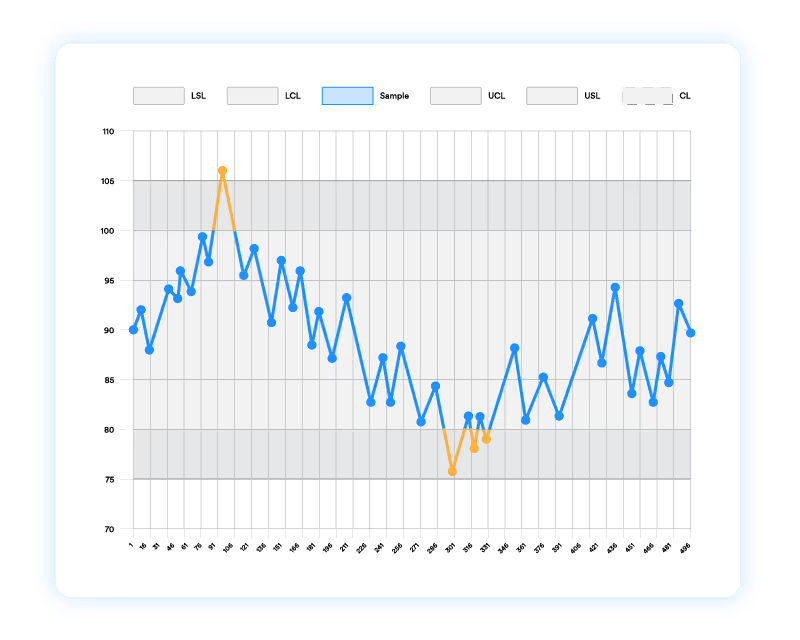
At its core, SPC is about understanding and managing process variation. It's about recognizing that, while some variation is natural (common cause), other types (special cause) can disrupt process continuity. Establishing process stability is crucial where SPC is concerned, and this is done by setting Upper Control Limits (UCL), Lower Control Limits (LCL), and Center Lining (CL). Once stability is achieved, the focus shifts to ensuring production process variability aligns with customer-defined specification limits, all of which help establish reliable, repeatable quality.
Knowing your Limits
In addition to things like UCLs, LCLs, and CL, Statistical Process Control sees manufacturers focus on several other objective measurements, two of which are the Voice of the Process and the Voice of the Customer:
- Voice of the Process (VoP) is the objective measure of a manufacturing process's performance. It's about interpreting what the process data—like cycle time and defect rates—communicates. Monitoring those data points not only helps businesses establish their UCLs and LCLs but also helps them track process stability and identify areas of production that are ripe for improvement.
- Voice of the Customer (VoC) is about aligning manufacturing outputs with customer expectations for quality and performance. It involves gathering and analyzing customer feedback to ensure the product not only meets technical specifications but also fulfills customer needs and preferences. Additionally, Upper Specification Limits (USL) and Lower Specification Limits (LSL) are typically set to provide visibility to the customer preference.
SPC and MES
When paired with a comprehensive manufacturing execution system (MES) platform like TrakSYS, SPC transforms manufacturing quality management. This partnership not only lends additional, pertinent operational context through which to view SPC data but also streamlines the alignment between internal performance benchmarks and customer quality expectations. Whether it be through direct integration with business systems and equipment or through the use of the versatile TrakSYS Smart Devices, when the platform is monitoring production, production team members will instantly be notified when something goes out of spec and will be able to quickly resolve the issue by leveraging the situational context TrakSYS provides.
FAQs
Related Blog Posts
.png)
.png)





Let’s Build Your Plan
We’ll help you create the right configuration—today and for the future.