
State of Manufacturing INDUSTRY
2026

Medium length heading

Lorem ipsum dolor sit amet, consectetur adipiscing elit. 
Suspendisse varius enim in eros elementum tristique.
State of Manufacturing INDUSTRY
2026

Digital
Technology Landscape

Key Insight N°1

Execution Systems
at the Center of Modernization

Manufacturing is no longer experimenting with digital tools —it is increasingly dependent on them.

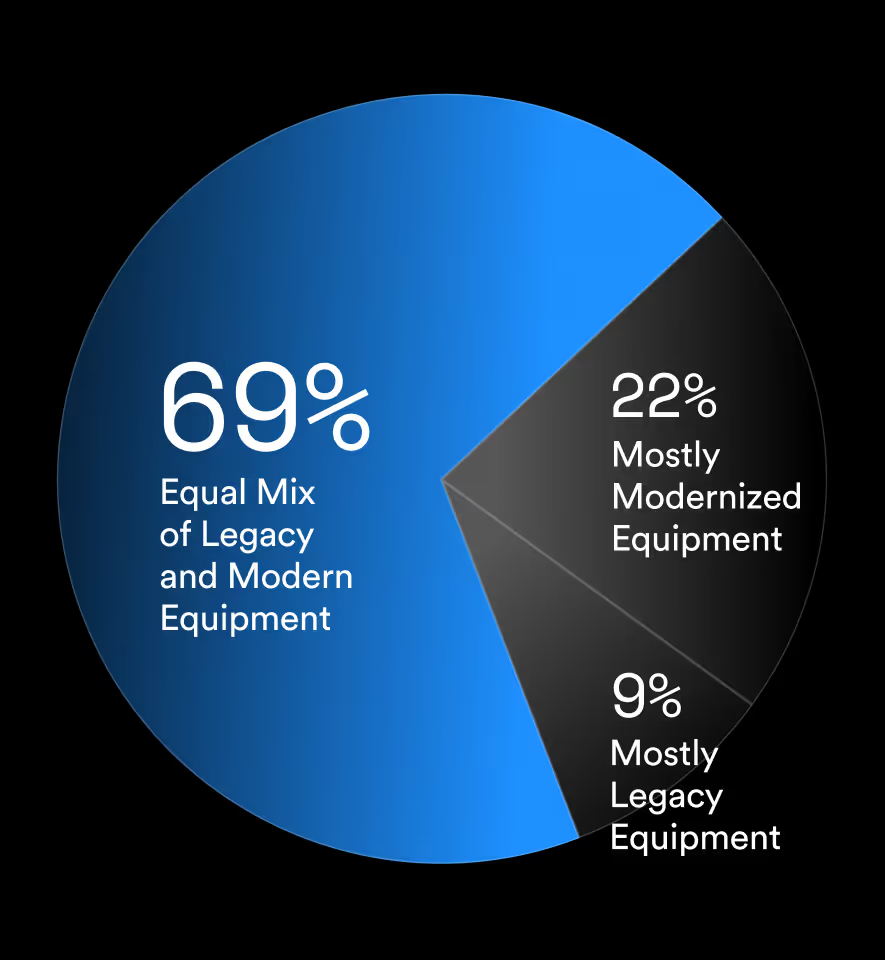
Most manufacturers (69%) report operating with a hybrid mix of legacy and modern equipment, highlighting the operational reality of integration across generations of infrastructure. Most organizations are still in transition rather than operating with fully modernized technology stacks.
interpretation
How would you characterize the state of legacy equipment across your plant network?
The majority of IT Leaders (69%) indicate their company has an equal mix of legacy and modern equipment in place across their plant network.
Among IT Leaders; Sample Size = 400
insight

Data Strategy Progress

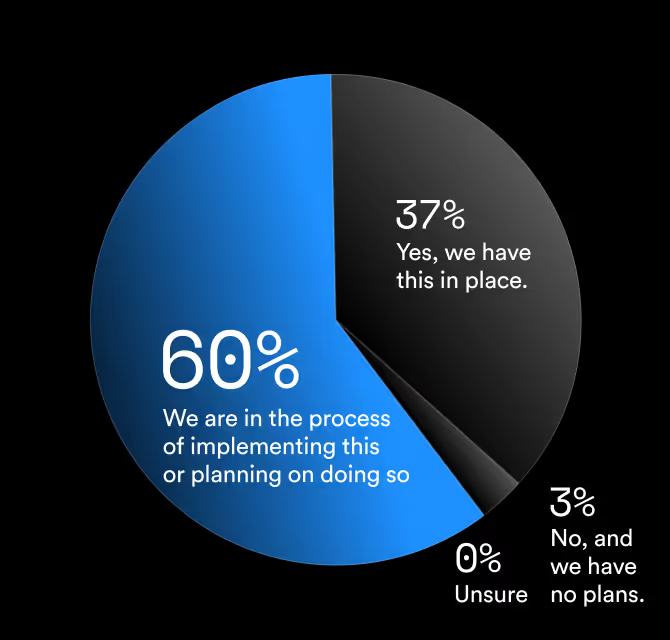
Only 37% of manufacturers currently have a unified, data-driven strategy in place.

However, 60% are either implementing or planning such strategies—up from 40% in 2024.

Does your company have a data driven digital strategy in place? Meaning, your company collects and stores data in an accessible, unified format so decisions can be made based on this data to improve future business performance.
More than a third of IT Leaders (37%) have a data driven digital strategy in place at their company; another 60% are in the process of implementing one or planning to do so.
Among IT Leaders; Sample Size = 400
Interpretation
Data strategy adoption is accelerating, but most organizations remain in early stages of maturity and are still building foundational architecture.
Interpretation
Insight
Data strategy maturity is lagging behind technology investment, creating a structural constraint on scalability, analytics, and AI enablement.
Insight

Most Common Digital Solutions

At face value, MES and QMS appear to be the most commonly used systems, while ERP appears lower than expected.

These results should not be interpreted as a reflection of ERP penetration. Given the structure of the survey question, responses reflect how systems are used operationally—not whether they exist within the organization.

Manufacturing execution system
44%
(MES)
Quality management system
43%
(QMS)
Enterprise resource planning
38%
(ERP)
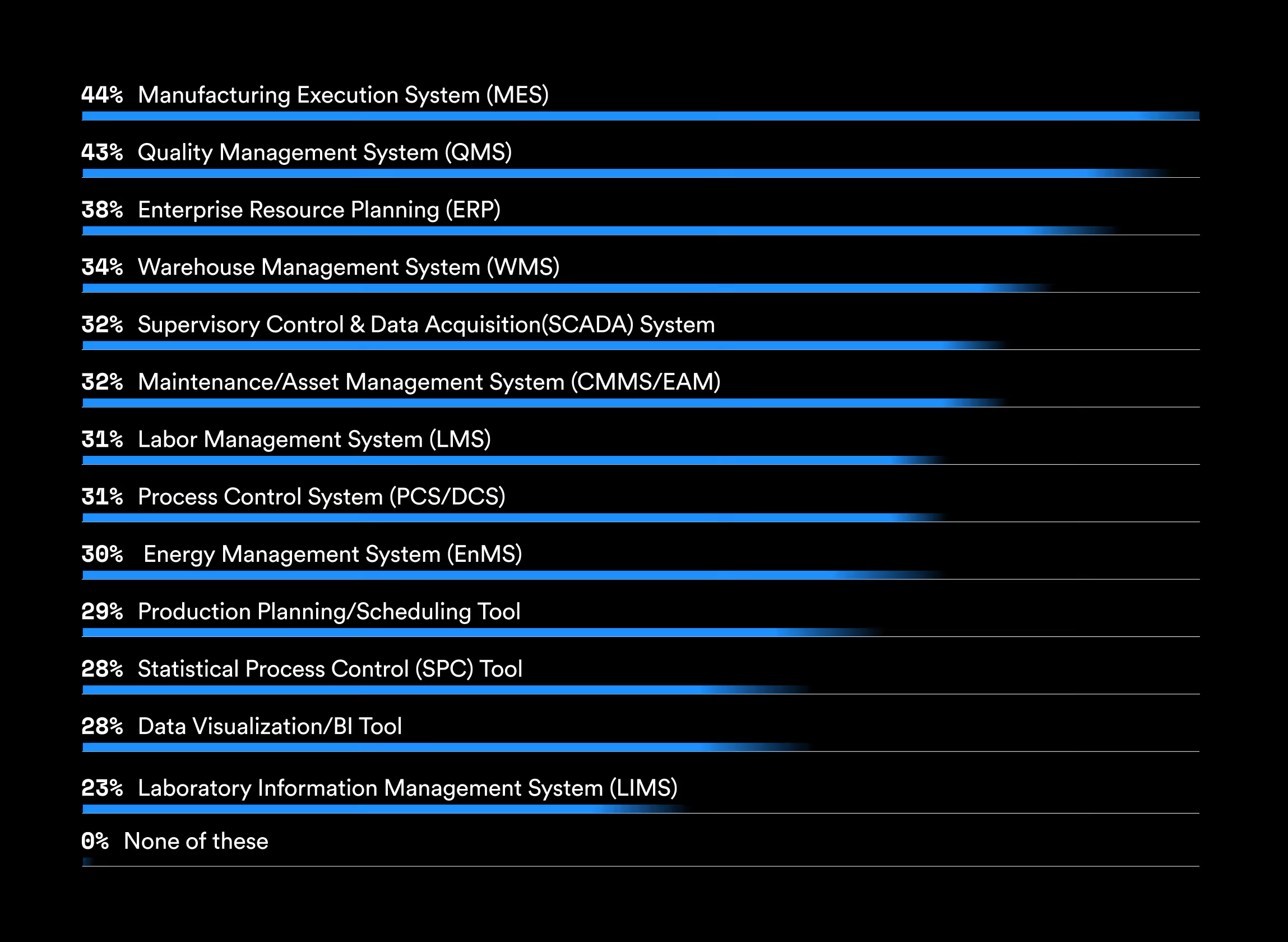
Which systems are used to manage manufacturing operations?
The most common systems companies have implemented to manage manufacturing operations are Manufacturing Execution Systems (MES; 44%), followed by Quality Management Solutions (QMS; 43%), and Enterprise Resourcing Planning (ERP) solutions (38%).
Sample Size = 1,200
Interpretation
ERP
In practice, ERP systems are nearly ubiquitous across manufacturing organizations, but are typically used for:·   Planning
·   Financial management
·   Record-keeping
MES & QMS
Whereas MES and QMS are more directly used for:
·   Execution
·   Tracking
·   Operational control
Interpretation
Insight
Manufacturers often have ERP systems in place, but day-to-day operations are executed through MES, spreadsheets, or manual processes.
Insight
Implication
This reinforces a key industry dynamic: The execution layer (MES/MOM) remains underdeveloped relative to enterprise systems, despite its central role in coordinating production, quality, and data flow.
Implication

Top Tools and Capabilities

Which of these, if any, is your company currently using? 

Please select all that apply.
More than half of OT and IT Leaders (54%) indicate their company is using AI/ML-enabled decision support, while half are using predictive maintenance tools or IIoT/Edge devices.
Among OT Leaders and IT Leaders;
Sample Size = 800
Interpretation
Manufacturers are investing heavily in advanced tools that enhance visibility, monitoring, and predictive capabilities.
Interpretation
Insight
The effectiveness of these technologies depends on structured, accessible operational data—which many organizations are still in the process of building.
Insight

Top Drivers of

Technology Adoption

What are the top drivers for adopting new technologies in your manufacturing processes?
(Top Three Ranked Responses)
Top drivers for adopting new technologies in manufacturing processes include enhancing data analytics capabilities (59%), meeting regulatory requirements (58%), and enhancing quality control (56%).
Sample Size
= 1,200
Meeting regulatory requirements
22%
Enhancing data analytics capabilities
21%
Enhancing quality control
18%
interpretation
insight